
Cleaning and Maintenance Tips for Fireplace and Stove Glass
Heat-resistant glass used in wood stoves and fireplace inserts is designed to withstand long-term exposure to high temperatures. However, to maintain its transparency, safety, and long lifespan, it is important to follow the correct cleaning, heating, and maintenance practices.
Why Does Heat-Resistant Glass Get Dirty?
Glass contamination is a normal part of using a fireplace or stove. The buildup of soot and smoke can never be completely avoided, but it is strongly affected by the quality and moisture content of the wood, proper chimney draft, sufficient combustion air, the lighting method, and correct primary and secondary air settings.
Stove manufacturers warn that using wet wood results in lower combustion temperatures, increased smoke production, and rapid soot buildup on the glass. Firewood should therefore have a maximum moisture content of 20%.
If the glass becomes excessively dirty even when burning properly, it may also indicate poor chimney draft, a clogged flue pipe, an unsuitable chimney diameter, or insufficient air supply.
For cleaner combustion and less soot buildup on the glass, we recommend using dry hardwood. Beech, elm, and cedar are excellent choices. Resinous woods such as spruce, pine, or larch are less suitable because the resin causes increased soot production and faster blackening of the glass.
Do not use wet wood, painted or treated wood, chipboard, plastics, waste materials, coal, or coke (unless approved by the stove manufacturer).
How to Properly Clean Heat-Resistant Glass
Before cleaning, always allow the stove or fireplace to cool down completely. Never clean heat-resistant glass while it is hot.
Cleaning hot glass may cause burns from the glass or metal parts of the door, rapid evaporation of cleaning products, and streaks or baked-on dirt.
For cleaning, we recommend using a special fireplace glass cleaner specifically designed for heat-resistant glass. This cleaner is made from special fibers that help mechanically remove soot and dirt without damaging the glass surface.
Thanks to these special fibers, the glass will not be scratched even when applying stronger pressure during cleaning. The cleaner is therefore suitable for regular maintenance of both wood stoves and fireplace inserts and helps keep the glass clean and transparent for a long time.
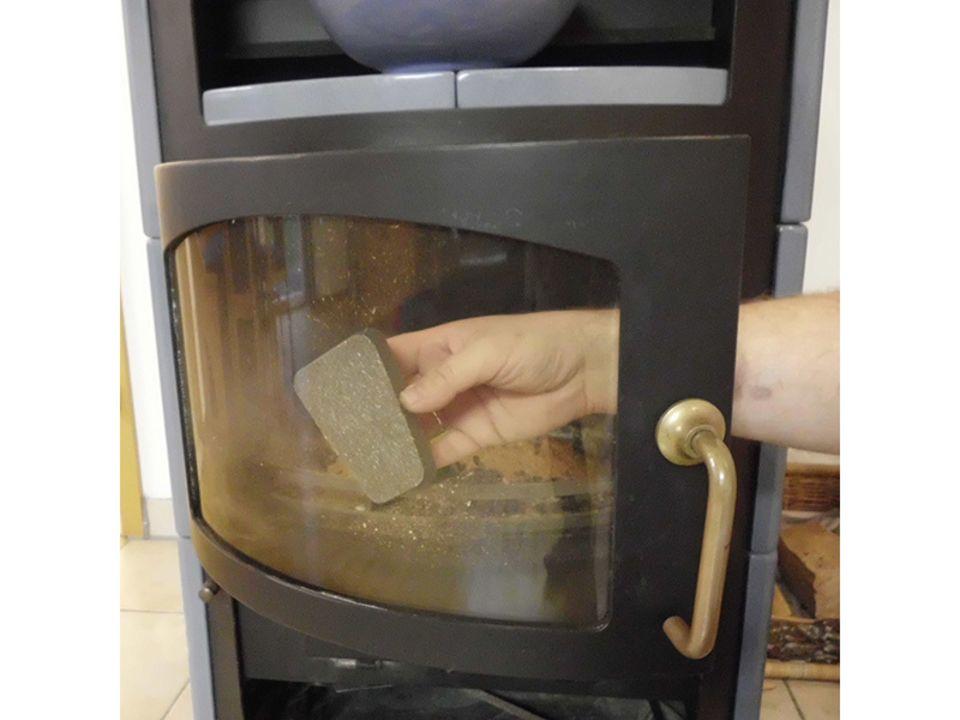
Correct cleaning of fireplace glass using a cleaner designed specifically for fireplace glass
What Should Be Avoided During Cleaning?
When cleaning fireplace glass, it is important to use suitable products and gentle cleaning methods. Improper cleaning may damage not only the glass itself but also the sealing gasket and other door components.
We do not recommend using aggressive liquid cleaners, abrasive sponges or steel wool, abrasive cleaning products, sharp metal objects, strong chemicals designed for other surfaces.
Be Careful with Liquid Fireplace Glass Cleaners
Liquid cleaning products are very popular, but excessive use may cause the liquid to run down the glass toward the gasket between the glass and the door frame.
The gasket may absorb the cleaner, which can gradually cause loss of flexibility, faster material aging, reduced sealing performance, shorter gasket lifespan.
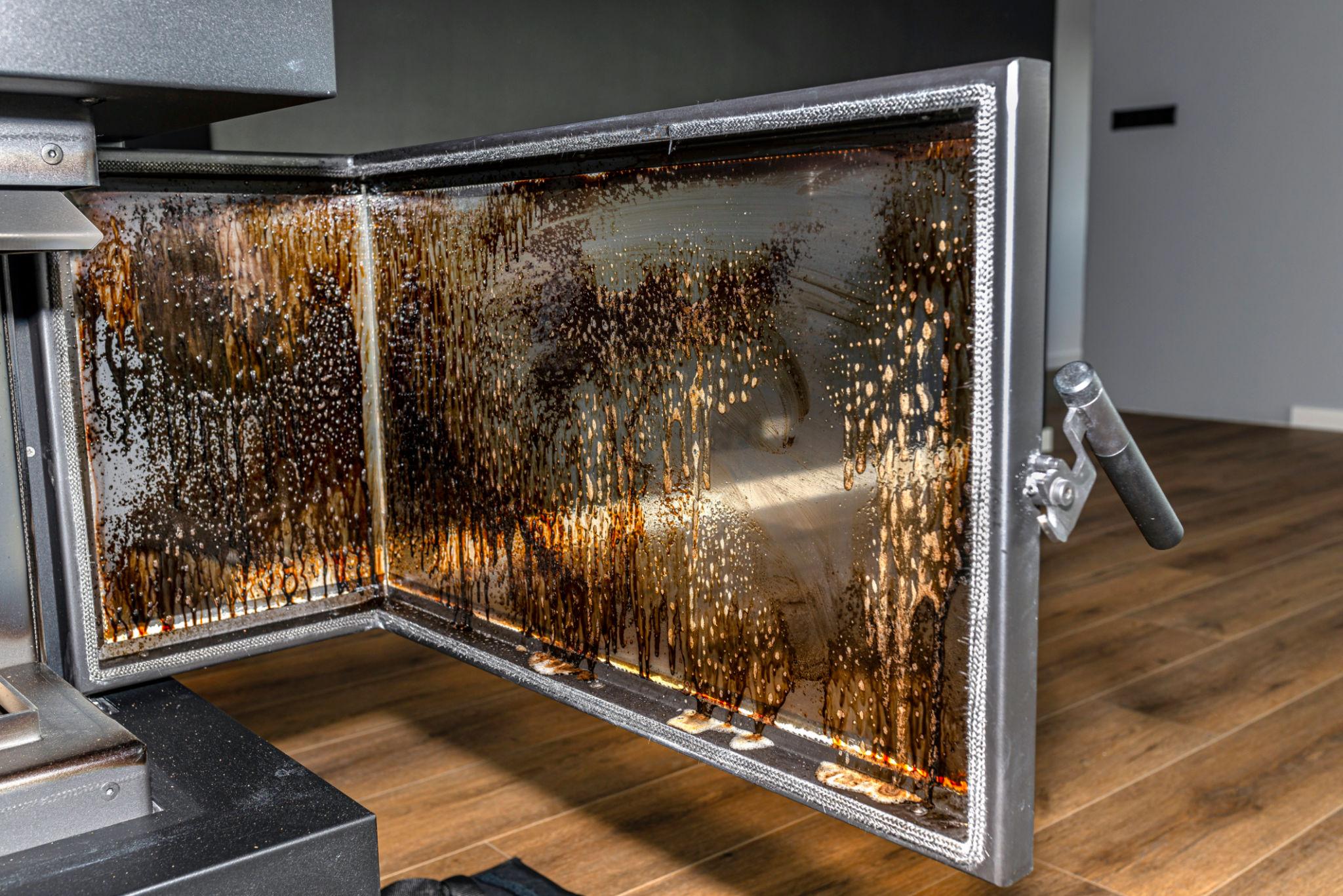
Incorrect cleaning of fireplace glass using liquid cleaner
If the gasket is already hard, damaged, or leaking, we recommend replacing it during maintenance or glass replacement. A suitable option is a self-adhesive heat-resistant sealing gasket.
Other Abrasive Sponges May Damage the Glass
Using abrasive pads or steel wool may result in:
- scratching the glass surface
- weakening the glass structure
- permanent visual damage
- reduced resistance to high temperatures.
Recommendations for Safe Cleaning
For regular maintenance, we recommend using only a fireplace glass cleaner specifically designed for heat-resistant glass. If you do not have this cleaner available, you can try the traditional method using a damp soft cloth or paper towel with a small amount of fine ash from burned wood.
The most important thing is always to use the gentlest cleaning method possible. This helps keep the glass cleaner for longer, prevents scratches, and maximizes its lifespan.
How to Prevent Fireplace Glass from Blackening?
Completely preventing contamination is impossible, but it can be significantly reduced. Use dry firewood ideally stored for at least 2 years in a dry and ventilated place. Ensure sufficient combustion air supply. Lack of air causes incomplete combustion and increased smoke production. Do not overly restrict the air intake, as too little air leads to smoke buildup, chimney contamination, and rapid blackening of the glass. When lighting the fire, use smaller pieces of dry wood and provide sufficient airflow.
How Often Should the Glass Be Cleaned?
We recommend light cleaning after several fires and more thorough cleaning regularly throughout the heating season. Regular maintenance extends the lifespan of the glass, improves the appearance of the flames, and helps maintain proper stove performance. It also ensures a clear view of the fire and improves overall heating comfort.
When Is It Better to Buy New Glass?
If the glass is permanently blackened, heavily scratched, burned by soot, cracked, or mechanically damaged, cleaning is often no longer effective and replacing it with new custom-cut heat-resistant glass is usually the better solution.
Recommended Types of Fireplace Glass
- Standard 4 mm Heat-Resistant Glass
The most commonly used option for wood stoves and fireplace inserts. 4 mm thick glass offers high heat resistance up to 800°C, long lifespan, and an excellent price-performance ratio. It is mainly used as a replacement for damaged or cracked original glass. Order Custom 4 mm Fireplace Glass here.
- More Durable 5 mm Heat-Resistant Glass
A stronger version suitable for demanding operation and higher mechanical stress. 5 mm thick glass feels more robust, offers greater strength, and is often used in larger fireplace inserts or more powerful stoves. It withstands temperatures up to 1100°C. Order Custom 5 mm Fireplace Glass here.
- Self-Cleaning 4 mm Heat-Resistant Glass
A modern solution with a special self-cleaning coating that helps reduce soot and dirt buildup on the inner side of the glass. As a result, the glass stays cleaner and clearer for longer and regular maintenance becomes much easier. Shop Self-Cleaning Fireplace Glass here.
- NightFlame Tinted 4 mm Heat-Resistant Glass
A designer tinted glass intended for modern fireplaces and stoves. When the fireplace is not in use, the glass has an elegant dark appearance, while during burning it still provides a pleasant view of the flames. It is especially popular among customers who want to combine functionality with modern design. Buy NightFlame Tinted Glass here.
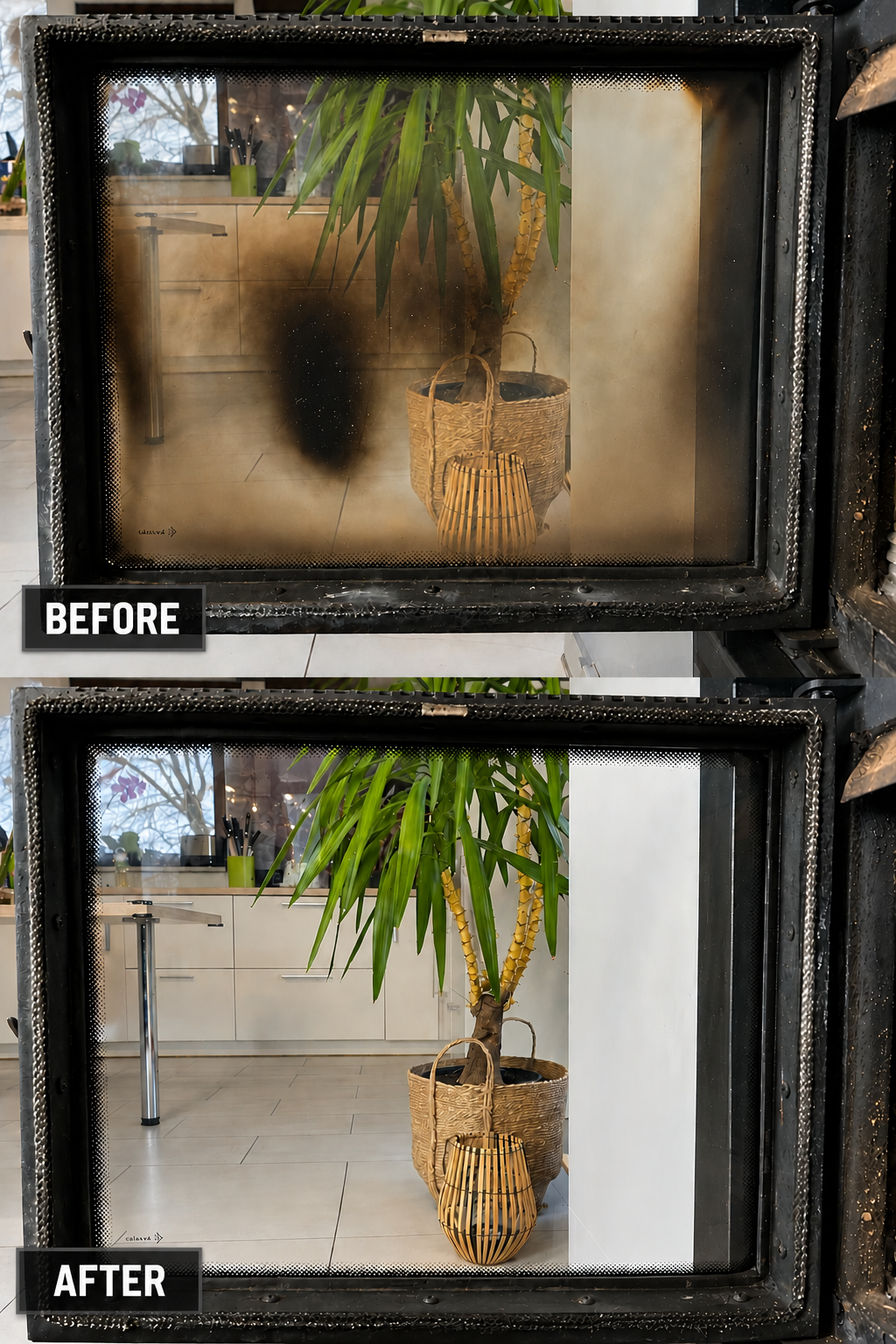
Difference before and after cleaning heat-resistant glass using a special fireplace glass cleaner
Whether you manage to clean the glass perfectly or decide to replace it with new heat-resistant glass, the most important thing is always having a beautifully clear view of the flames and fully enjoying the cozy atmosphere of your fireplace. Regular maintenance and high-quality glass help preserve not only a better appearance but also a longer lifespan for the entire fireplace or stove.
Important Notice
Heat-resistant ceramic glass is resistant to high temperatures and thermal shock. However, it may still be damaged by mechanical impact, excessive tightening of mounting brackets, or improper handling during cleaning. We therefore recommend always proceeding carefully and using only products specifically designed for cleaning fireplace glass.